Win or Die
“A prisoner, desperate to reunite with his family, opts into a high-stakes program to compete for a second chance at life.” –IMDB
Rumors of War
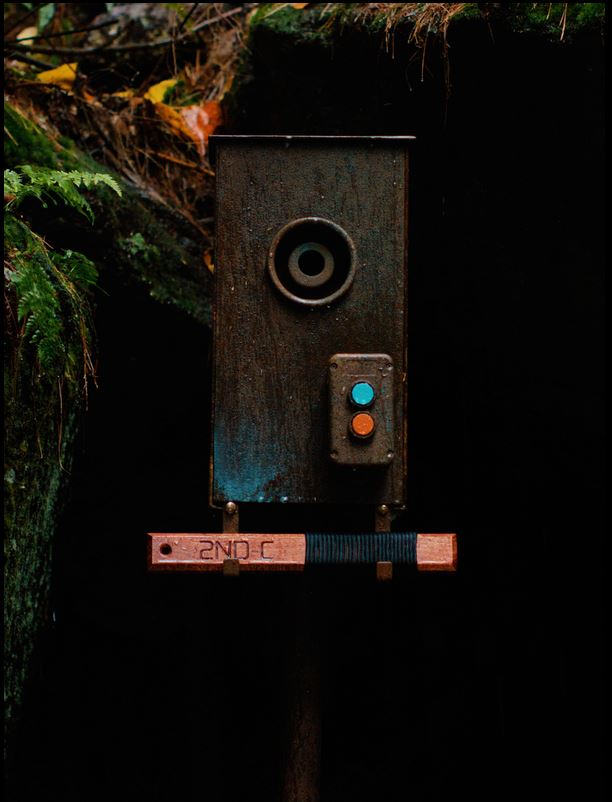
Rumors of War is a short film set in late 17th century British American colonies. I found a house Connecticut built in 1680 that generously allowed us its use for a day of filming. The house acts as a museum during the everyday and also lent us a significant amount of period set pieces. I also sourced reproduction pieces from around New England, aged muskets with acid, leathers with dyes and researched colonial food sources, scouring farmer’s markets for heirloom goods and making bread.


Thorp
Thorp is a feature length film following a man from the 1980s transported forward in time to the 2010s and his journey understanding his new world. He finds solace in old fashion diners and duckpin bowling alleys. Shot over the course of a year, Thorp was a group effort. While we found some amazing locations to use for this film, it was important to make sure the elements that came with them worked with the film’s aesthetic and ensured that Thorp was always the most neon object in the frame.


The Persephone Logs
The Persephone Logs is a short sci-fi film set in an dystopian future. It follows a group of refugees living in an old coastal war fort abandoned by generations past. The location was heavily graffitied, adding a lot of color to the cold, winter world. We decided to stay within the color scheme the graffiti gave us, mostly blues, purples and reds.
Their refuge was built with sawhorses, old runway signs repurposed for makeshift tables and long lasting tools. An element included in the script was the raiding of old museums for weapons so we created a blacksmiths shop in the war fort so they could make ammo as well as hooks and knives for everyday use. The commanders room is decorated with drawings from the camp’s children to show her softer side. There is a small kitchen space, laundry area and a birthday party being thrown with colorful plates for decoration. Candles were used for practical lighting to maintain an element of realism.


The Crying Man
The Crying Man is a short film that follows a story book artist who works out of his home as he embarks on a mission to help the community find a missing child. He is somewhat frenzied, living in a sense of disorder. We created a living environment that was full of color with rich backgrounds. I created quite a few illustrations and watercolor paintings specifically for this story that foreshadowed plot points. Later in the film, the view of the world changes from inside his mind to how it actually exists per an outsiders perspective, sterile and empty. Eventually, the story finds its way to the missing boy, a metaphor for the man’s younger self. The boy is surrounded by children’s drawings in the attic he is being kept in. Moldy food scraps are on the floor to show the passage of time.


Harbinger
Harbinger is short film following four characters attempting to survive a nuclear winter. The world of the film is not set anywhere on earth but was built around a early 20th century motif. The setting we choose for the pre-war scenes was a house built in 1910, based off of the Groote Schuur estate in South Africa. This house was unlike anything else in the area, with smooth walls, archways and wide glass panels. It helped to give the film an otherworldly feel compared to the standard Dutch colonial. This house served as a safe house, almost orphanage, in the film, similar to when parents would send their children to the countryside in WWII. Inside the house, we furnished rooms with drawings instead of photographs, vintage china and hand sewn quilts.


In the post-war section of the film, the characters are traveling outdoors in the snow. The two main characters, teenagers, make camp every night. It was important to us that everything the characters have in camp is carried on their person. This included an military tent, bedding, meager hunting supplies and some food. The food they ate was mostly non-perishables, canned vegetables and the occasional desperation cat food. Because they were younger and less experienced with the world, the items they carry are a little cumbersome, heavy and inefficient. One of the characters was a cannibal who maintained two camps, one to sleep and one to make food. His resting camp was a hayloft, made to be warm and cozy but hard to see. A few elements of his downtime are evident, such as an interrupted game of solitaire and empty food scraps. His butchery setup is a small spit hidden in a forest of small white pines, away from other eyes. We spread some of the victims clothes near the site, along with a deer rib cage and spine donated to the production by a local hunter. Another part of a deer, its small molars, were used later in the film to show the effects of radiation poisoning as a character begins to lose his teeth. The last character, a seasoned veteran of the outdoors, has a warm camp with furs and an ample supply of non-human protein. The last thing we created for the film was a weathered book of religious texts, with its own font and stories.


Beyond the Pale
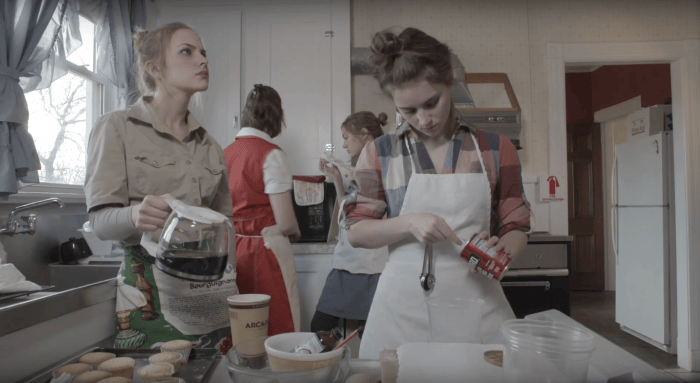
Beyond the Pale is a short film about a group of women who work in a small town coffee house by day but are woodland witches by night. I was brought in to do art direction for the kitchen of the little diner. The director had found a small meeting house kitchen to shoot the scene in. I filled it with baking supplies including pans, cupcake tins, icing bags and all the ingredients needed for the props: coffee, sugar, flour and the like. I made approximately eight dozen cupcakes and ten pounds of frosting.